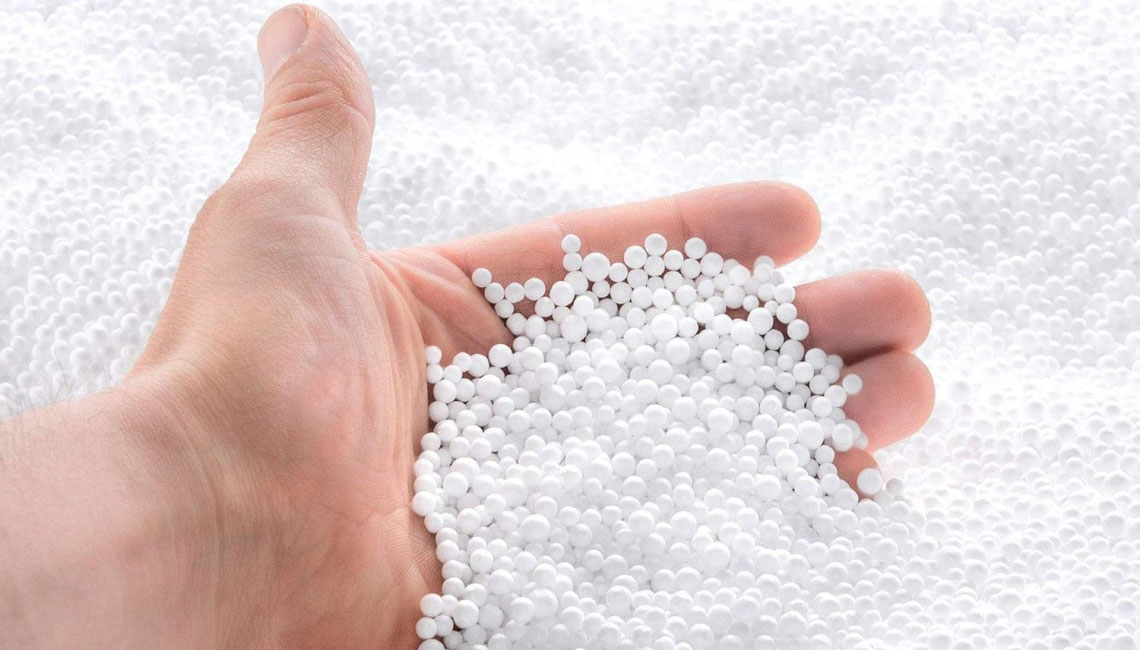

In the rapidly evolving world of logistics and e-commerce, packaging materials come and go. From mushroom-based foams to honeycomb cardboard, many "disruptors" have entered the market. Yet, Expanded Polystyrene (EPS) continues to hold its position as the global industry leader.
As a dedicated manufacturer and supplier of EPS raw materials, we see firsthand why the world’s biggest brands stick with EPS. Here is why EPS remains the gold standard for protective packaging when compared to the alternatives.
1. Unmatched Shock Absorption
When it comes to protecting high-value electronics or delicate medical equipment, the physics of EPS are hard to beat.
- Energy Dissipation: Unlike rigid cardboard or molded pulp, the closed-cell structure of EPS beads acts like millions of microscopic springs, absorbing and dissipating kinetic energy during a fall.
- Predictable Performance: EPS provides a consistent "crush" rate, allowing engineers to design precision-fit packaging that guarantees safety under specific G-force loads—something natural fiber alternatives struggle to replicate consistently.
2. Thermal Insulation Excellence
For the cold-chain industry—including food delivery and pharmaceutical transport—temperature control is a matter of safety, not just quality.
- Low Thermal Conductivity: EPS is composed of $98\%$ air, which is a poor conductor of heat. This makes it an elite insulator.
- The "Ice Pack" Factor: In head-to-head tests against biodegradable liners, EPS containers maintain internal temperatures for significantly longer periods, reducing the amount of refrigerant (like dry ice) needed and lowering overall shipping weight.
3. High Strength-to-Weight Ratio
In the shipping world, weight equals cost. EPS is incredibly lightweight, yet it possesses a high compressive strength that allows for efficient pallet stacking.
- Fuel Efficiency: Because EPS is so light, it adds virtually zero weight to a shipment, helping companies reduce their carbon footprint during transport compared to heavier cardboard-based solutions.
- Stacking Stability: EPS corner protectors can support hundreds of kilograms of pressure, preventing the "crushing" effect often seen with paper-based protectors in humid warehouse environments.
4. Moisture Resistance and Hygiene
Paper and bio-based alternatives are highly susceptible to humidity. Once they get damp, they lose their structural integrity and can become a breeding ground for mold.
- Non-Hygroscopic:EPS does not absorb water. Whether it’s sitting on a rainy loading dock or inside a humid shipping container, its protective qualities remain 100% intact.
- Food Safety:EPS is chemically inert and bacteria-resistant, which is why it remains the top choice for transporting fresh seafood and agricultural products.
The Sustainability Reality: EPS is Recyclable
The most common argument for alternatives is "sustainability," but the narrative is shifting. Modern EPS is a single-polymer material, making it 100% recyclable.
- Circular Economy:With the rise of densifiers and advanced chemical recycling, used EPS is being turned back into virgin-quality beads or durable goods like picture frames and construction trim.
- Lower Manufacturing Footprint:Producing EPS often requires less water and energy than producing paper-based alternatives, which require intensive chemical processing and high water usage.
Conclusion: The Reliable Choice for Your Bottom Line
While alternatives have their niche, none offer the total package of protection, insulation, lightness, and cost-effectiveness that EPS provides. By choosing high-quality EPS raw materials, you are choosing a proven solution that minimizes product damage and maximizes customer satisfaction.
Protect your products with the best.
As a primary EPS manufacturer, we provide the high-consistency beads needed to create world-class protective packaging. Email us info@epsbeads.com to discuss how our raw materials can optimize your packaging production.